See the Observation Planning Tools Below ↓
This toolkit didn’t start as a plan. It grew out of a practical problem: how to quickly tell if a student’s telescope observation actually worked. It sits somewhere between astronomy, education, and code.
The tools are written in Python, developed in collaboration with AI, and work directly on FITS files: reading them, identifying objects, calibrating against catalogs, taking measurements, and producing plots, spreadsheets, and images.
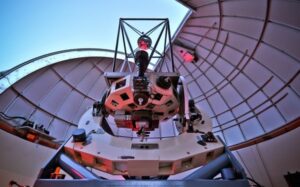
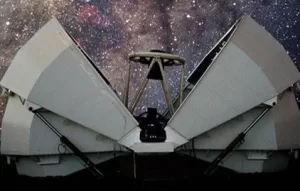
The need grew out of working with students on observation-based projects using robotic telescopes, both the LCO network and the Kinneret Observatory telescope. We needed a quick way to check whether an observation was good enough for the project, or whether it had to be repeated, or the target or telescope changed.
The scheduling tools for eclipsing binaries and exoplanets have helped us a lot in timing observations to the eclipse or transit windows.
The tools that build light curves of the eclipse or transit let us quickly see whether it was actually captured, and whether the observation is good enough to detect the dip above the noise.
The tools that build CMD let us quickly see whether the seeing, resolution, and field of view were adequate.
One of these tools maps the radial density of blue, young star forming regions across a galaxy. The method comes from Noah Brosch, who developed a broadband color approach alongside the classical, Hα based systematic survey of HII regions in external galaxies pioneered by Hodge and Kennicutt in the 1970s – 80s.
The tool for quickly spotting and identifying moving objects in a frame series lets us check whether an asteroid or comet happened to be caught in a sequence of images, and whether it’s a known object or one worth reporting as new.
The tools also support comparing results against measurements students make with software like Aip4Win, and work alongside image processing tools like PixInsight.
Beyond the obvious help with development, working on these tools with AI has also sharpened our own critical thinking about planning observations and designing the projects themselves. We suspect students would go through a similar process if they used AI to build their own processing and analysis tools during their projects.
This is a didactic benefit that goes beyond the tool itself.
Here are the HTML tools: